From Stress and anxiety to Relieve: Equine-Facilitated Health for Calmer Living
On a windy Tuesday, a female called Cara stood next to a silent bay gelding with her hands drinking so hard she could barely clip on the lead rope. Panic had actually come to be an acquainted visitor for her, barging in throughout team conferences, at traffic signals, on Sunday evenings for no factor whatsoever. That day she discovered to match her breath to the fluctuate of the horse's ribs. 4 rounds in and the gelding sighed, lowered his head, and licked and chewed, little indications of relaxation every horse person understands well. Cara's throat loosened up. It was the initial full inhale she had actually taken in months.
This is the entrance equine-facilitated wellness opens up for many individuals. Horses do not fix human troubles. They do something a lot more sincere. They reflect, they ask for existence, and they react to clear, symbolized communication. That is where calm can take root.
What occurs in equine-facilitated wellness
In practice, equine-facilitated health attracts from therapeutic horsemanship and other equine-assisted solutions to support nervous system law, emotional recognition, and practical coping skills. The format depends upon your objectives and the supplier's credentials. A licensed psychological health specialist might provide therapy in collaboration with an equine specialist, focusing on anxiety assistance with horses, sorrow, or trauma processing. A coach might lead equine-assisted coaching sessions that center on management, borders, or self-confidence. A program built for kids can highlight experiential discovering with horses, social skills, and sensory integration.
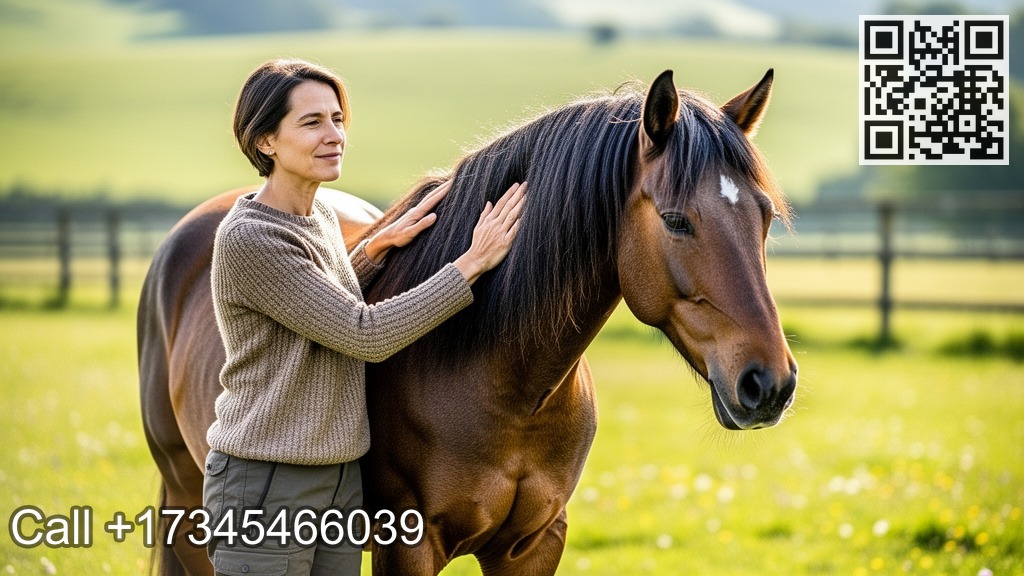
The common thread is communication with real-time equines, usually on the ground. Activities include pet grooming, leading, observing herd characteristics, liberty work, and straightforward barrier navigation. Mounted work can be part of restorative horsemanship, specifically for balance, sequencing, and self-confidence, yet it is not needed for emotional gains. Standing quietly in a pasture, discovering exactly how your breast feels as a 1,000 extra pound victim animal selects to stand near you, can be enough for a breakthrough.
Most sessions last 60 to 90 mins. Some programs function one to one, others in small teams, often 3 to 6 individuals. The activity arc is foreseeable deliberately. Show up, facility, satisfy the steed or herd, take part in an organized task, debrief, and close with a grounding regimen. Predictability becomes part of the medicine for anxious systems.
Why horses aid when words drop short
I have benefited years with people that can not locate words for what their bodies are lugging. Steeds fulfill them prior to words. The reasons are sensible, not https://pastelink.net/0ox7743h mystical.
Horses check out nonverbal hints with a level of sensitivity we struggle to match. They discover taking a breath depth, muscle mass tone, micro-movements, and rhythm. If your jaw is tight and your actions are quick, the horse may raise a head, plant a foot, or drift away. If you soften at the shoulders, reduce your exhale, and set a consistent strolling pace, the steed often tends to mirror and comply with. This is biofeedback you can really feel. You do something different with your body, and the equine reacts in genuine time.
This supports somatic healing with steeds. You are not only speaking about anxiousness, you are practicing what calmer feels like. Gradually, customers learn to disrupt spirals. Rather than assuming their escape of anxiety, they shape their breath, position, and emphasis first, then talk from a steadier place.
Horses also bring scale. Nervous thoughts usually extend to load our field of view. Stand close to a mild draft mare who relaxes her chin on your shoulder, and your field of view needs to broaden. There is even more truth than the story in your head. That perspective shift is not an assurance, but when it takes place, people remember it in their bones.
A walk through a first session
People commonly ask what to expect. Right here is a composite from many first days.
You park and observe the silent. Many barns sit off main roads. Birds, the faint chink of a bucket, the odor of hay, all of it slows down the nervous system a notch. At consumption we check medical history, current assistances, and goals. For stress and anxiety, objectives commonly include sleeping with the night, less panic spikes, increased resistance for congested spaces, and a method to turn the dial down at work.
We start with positioning. Where to stand, exactly how to approach a horse at the shoulder, why it matters to keep your feet clear. Safety is not a lecture, it is an initial lesson in presence. You can not message and deal with a lead rope at the same time.
With the horse at the rail, we practice breath in a manner that is not precious. Breathe in with the nose for concerning 4 counts, pause, exhale through the mouth for a somewhat longer count. Place a hand on the steed's shoulder if the pet allows it, really feel the warmth and muscle mass, notice their rib cage shift. Many horses will certainly start to yawn or blink greatly after a min or two of quiet touching. That release seems to give individuals permission to allow go too.
Grooming has a tendency ahead following. It is tactile, foreseeable, and pleasing. I have viewed high achievers feel authentic alleviation while curry combing in slow, also circles. There is a job, it is clear, and conclusion is evident. That quality usually stands in comparison to life outside the field where jobs multiply without end.
We may establish a pattern with cones. Walk to red, pause, turn, wait for the equine to find you, then proceed with each other. It seems stealthily basic. This is where individuals see just how their internal state appears externally. If you hurry, your steed may delay or turn away. When you practice two sluggish breaths at each cone, your horse commonly steps up and matches you. The following day at the workplace, those two sluggish breaths at a doorframe become a memory anchored to a really felt sense of success.
We close with a debrief, sitting near the arena wall with water and often a peppermint for the equine. What really felt simple, what felt like job, what surprised you. We pick one technique to try in your home. The objective is constantly mobility. Procedure issue, but the week in between issues more.
How anxiousness turns up around steeds, and what shifts
Anxiety is not one thing. It can be a hum under the skin or a full surge that hijacks your breath. With steeds I regularly see 4 patterns.
First, over-functioning. People try to do whatever right simultaneously, eyes flicking, hands busy, a voice that runs ahead of breath. Horses review this as noise. Teaching individuals to simplify to one hint each time can reduce everyone's heart rate.
Second, freeze. Some customers secure their knees and stop breathing. With them, I start at the fence line. We do not touch a lead rope till we can really feel feet in boots and back-of-ribcage breath. Commonly I put a tiny sand timer on a post. Two minutes of just noticing can reboot movement without compeling it.
Third, evasion loaded as politeness. Individuals will certainly stand five feet away and ask the horse to find more detailed, scared to assert room. A kind gelding will walk over, however the person has actually not found out to take a step into their own ground. This is where a calmness, sustained stride, heel to toe, ends up being a breakthrough.
Fourth, press with. Individuals that barrel forward in spite of nerves tend to hit a horse's borders. If the mare swings her hindquarters away and pins an ear, that is information. Respect for those signals becomes respect for one's own restrictions later on. I have viewed customers terminate an overbooked evening after ultimately noticing what excessive seems like in their body.
What changes gradually is not an individuality transplant. It is a steadier standard and a quicker go back to baseline after stress. Sessions offer you reps. Aim for 6 to 8 once a week sees at the beginning, after that infected biweekly. Some customers stay for a period and feel ready to carry on. Others come back throughout difficult life phases like divorce or grief.
When mentoring, treatment, and activities overlap
Terms can be complex. Equine-assisted services is an umbrella that consists of treatment, learning, and training. Therapeutic horsemanship frequently stresses skill building and flexible riding. Equine-assisted activities can resemble team building with horses, young people management, or wellness retreats. Equine-facilitated training has a tendency to focus on objectives, habits, and performance. All of these can come from equine-facilitated health if the goal is whole-person guideline and growth.
Clarity issues. If you require therapy for identified anxiety or trauma, pick a program with a qualified psychological wellness professional integrated into sessions. If you are looking for brand-new tools for stress and anxiety and more clear interaction, equine-assisted coaching may fit. Ask about the service provider's extent, training, and just how they coordinate with your existing supports, including medicine prescribers or chat therapists. Excellent programs happily collaborate.
Horses and kids with sensory or attention differences
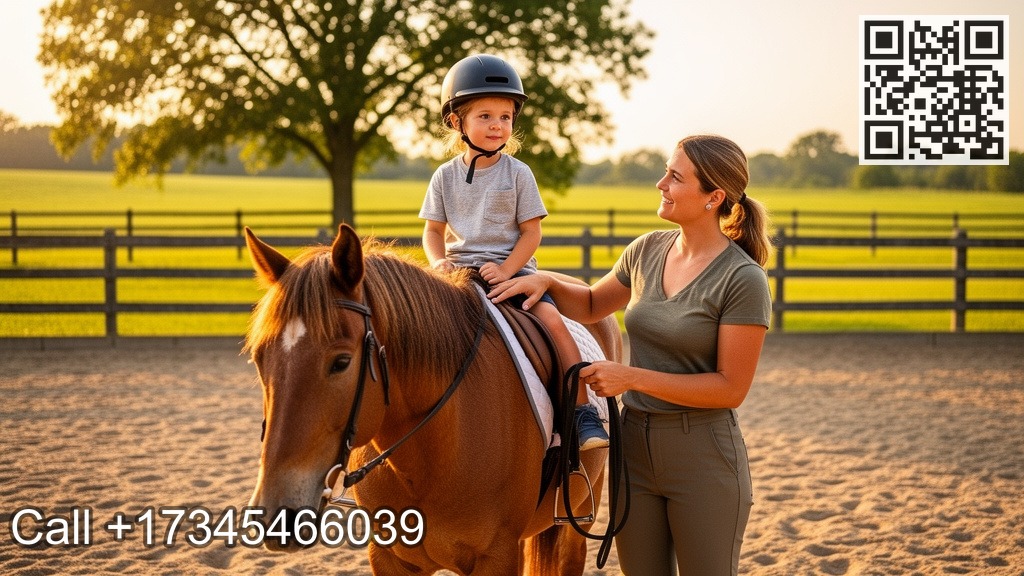
Horses can be a lifeline for kids who have a hard time to rest still, endure noise, or checked out social signs. I have actually run an autism equine discovering program where the first win was simply a youngster entering the barn without turn over ears. We positioned check outs at quieter times, utilized visual routines, and kept tasks short with clear beginnings and surfaces. Horses provided social hints that were unambiguous. If a child waved near an equine's flank, the horse shifted away. When the child softened their body and touched at the shoulder, the horse returned. That loop instructed timing and gentleness faster than any worksheet ever could.
ADHD equine learning assistance looks various. We burn energy initially. Twenty laps of leading at a quick walk, weaving with standards, then grooming. Installed job can help with sequencing and right-left combination. I such as patterns with three to 5 actions since success is quantifiable. We also exercise peaceful waiting, not as a punishment, but as a shared time out with the steed. A min is a very long time for some children. When the horse yawns midway with the min, kids see their effort land.
For children with sensory challenges, equines provide an alternate therapy for sensory challenges that matches occupational treatment. The feel of an equine's coat, the rhythm of walking, and the deep pressure of leaning right into a cozy shoulder can organize a tired out system. That stated, not every child enjoys barn noises or scents. Some require ear security or a shorter browse through. We go by the kid's cues, not our agenda.
Adults, work, and the herd
Adults frequently show up for a couple of reasons. Either their anxiety is dripping right into domesticity, or it is constricting their leadership at work. With the last, team building with steeds can be disclosing. You can not fake followership with a horse. If your cues are irregular, the horse thinks twice. If you rush, the horse stops. If you obtain huge without balance, the horse spooks. Groups that battle with trust frequently duplicate those patterns in the arena.
A short sequence I such as includes haltering a steed en masse, then relocating through a simple L-shaped challenge course. No talking allowed until the end. People learn to communicate with eyes, breath, and hands. Later, in debrief, the quiet coworker typically shares that she lastly really felt heard. The talkative supervisor realizes he actions in ahead of time. Back at the office, that insight becomes a change in conference assistance or delegation.
The gain is not magic. It is experiential understanding with steeds that makes abstract principles concrete. Borders come to be where you stand and when you tip. Compassion ends up being exactly how you match rate. Responsibility comes to be whether the equine really moved via the barrier with you.
Safety, approval, and horse welfare
A calm end result hinges on a foundation of safety. Helmets are not simply for riding. Closed-toe footwear are nonnegotiable in the majority of programs. We teach individuals to notice ears, eyes, tail, feet, and to read the entire horse, not one part. Nerve systems co-regulate both methods. If the equine is limited, we listen. If the individual is overwhelmed, we tip back.
Consent runs both directions. Ask prior to touching. View the horse's answer. A reduced head, a soft eye, a weight change towards you, these are thumbs-ups. A tail swish, pinned ear, tightened up muzzle, or move away implies pause. Constructing a behavior of asking and seeing changes the tone of sessions and, with time, the tone of relationships outside the barn.
Welfare is not window clothing. Good programs maintain herd sizes practical for the land, track body condition scores, revolve turnover, and schedule normal farrier and veterinary treatment. Sessions consist of breaks and do not deal with horses as tools. If a steed declines a task, we respect that. If a steed repeatedly decreases, we reassess their role. I have actually retired horses to full pasture lives when they revealed us they were done saying yes.
Myths worth setting down
A couple of ideas often tend to puzzle newcomers.
Horses as therapists. Steeds are not therapists. They are partners who offer comments and existence. People, with training and ethical guidelines, hold the restorative frame.
Ride or it does not count. Groundwork can be as, or much more, reliable for stress and anxiety support with steeds. Mounted job has benefits, especially for postural control and rhythm, but tranquility does not depend on a saddle.
Quick fixes. You might really feel a change in session one. Long-term modification normally takes weeks, often months. That timeline is not a failing. It reflects how bodies learn.
Only for horse individuals. A number of my most receptive clients had never ever touched a horse prior to they walked in. A beginner's mind helps.
A brief tale of 3 clients
Sam, a firemen, can be found in with a system tuned for activity. He had evening awakenings, a jaw that clicked from clenching, and a tendency to pace. With a tranquil gelding named Rio, Sam practiced three breath cycles before every request. After six sessions, his partner reported fewer door checks before bed. Sam claimed he was making use of the breath sign at the station prior to tough calls. He did not become less watchful. He ended up being much more discerning concerning when to transform it on.
Mila, a center schooler with autism, wished to stop covering her ears throughout assemblies. Noise-canceling earphones assisted, yet she wanted an additional tool. Over 10 weeks we built a routine with a horse named Jasper. 2 brushes each side, after that a nose touch, after that three actions together. At week four she asked to lead without me. At week 8 she attempted an assembly with headphones down for the very first 5 mins, fingers on her ribs to really feel breath. She made it seven minutes that day, then twelve the next week. On week ten she turned to her mom and claimed, I can do hard points if I count my breaths.
Dev, an advertising and marketing executive, scheduled equine-facilitated training after a 360 evaluation called him dazzling and laborious. In the field he asked a mare to stroll on, after that clucked, then tugged, then raised his voice. The mare iced up. We reset. He exercised one ask, then a time out. The mare took a step. Waiting was the work. Dev later on redesigned his face to face around a solitary concern and a quiet count of 3 before replying. His team did not unexpectedly adore him. They got even more area. Result improved.
Simple ways to bring barn calm home
Two techniques move well from the sector to life. They sound basic. Simple is the point.
A breath that leads. Steeds adhere to breathe out. Individuals do as well. When you feel activation increase, lengthen your out-breath by a 2nd or more. Use a doorframe, a crosswalk, or the moment your video call links as your sign. You can include a hand on your sternum if that helps.
An action that asserts space. With an equine, stepping toward the shoulder with quality welcomes motion. At the office or in the house, take one mindful enter your own ground prior to you speak, especially if your voice often tends to vanish under stress. That step changes what leaves your mouth.
Who it is not for, and when to wait
Honesty offers everybody. Equine-facilitated health is not optimal for individuals in energetic psychosis or those with uncontrolled violent habits. If you remain in severe withdrawal, dilemma stablizing comes first. Severe allergies to horses or hay can be a barrier, although some clients take care of with medicine and masks.
If you are terrified of steeds, it can still work, but we go slow. Some customers begin with monitoring outside the fence for a couple of sessions. Others understand a different method would certainly be kinder to their nerves in the meantime. Selection is central.
Choosing a program you can trust
The area includes numerous excellent carriers and a few that rely upon buzzwords. Look past the website gloss. Inquire about training, safety protocols, and exactly how they customize sessions to anxiousness. You wish to hear clear boundaries, mention of permission, and regard for steed well-being. Ask what a typical development resembles and just how they determine change. Suppliers ought to be willing to coordinate with your specialist or medical professional if you wish.
Here is a brief list to lead your search:
- Credentials line up with your demands, for instance a qualified specialist for medical anxiety or an experienced instructor for efficiency goals.
- Safety techniques specify, including helmet policies, emergency situation strategies, and equine selection.
- Sessions are structured, with time for grounding, activity, and debrief.
- Horse welfare is clear, with information on turnout, workload, and healthcare.
- Goals and progress are tracked in composing, and you obtain copies.
If you go to, discover your body in the area. Do you really feel hurried. Does the barn feel organized. Are steeds standing with soft eyes or pinned ears. Your nervous system frequently understands prior to your rational mind catches up.
What the numbers can look like
I stay clear of sweeping promises, yet patterns show up. Across eight to twelve sessions, the majority of clients report sleeping better, shorter and less intense panic spikes, and boosted interaction in your home or work. I have seen relaxing heart prices stop by 5 to 10 beats per minute during sessions compared to consumption, based upon wearable data customers shared. That modification might not linger 24 hr a day, but the body discovers what ease seems like and improves at returning there.
Attendance issues. Weekly sessions for the first month develop energy. In the house, people who pair a daily 2 minute breath exercise with a short body scan have a tendency to keep gains. Those that share goals with a spouse, good friend, or associate normally follow up more consistently.
Integrating with other supports
Equine-facilitated wellness usually sits close to talk therapy, medication, yoga exercise, or mindfulness methods. The key is interaction. If you are on a new medicine, inform your facilitator. Some medicines alter sweat price or warm tolerance. Warm barns can surprise you. If your therapist is working on a particular direct exposure plan for stress and anxiety, your equine sessions can strengthen the same skills with clear, physical feedback.
I have had clients bring journal motivates from their therapist out to the rail. I have joined instance calls with school groups to align techniques for a youngster with sensory level of sensitivities. The equine work is powerful, yet it is not a silo.
Getting started without overwhelm
Beginning something brand-new while nervous can seem like dragging an anchor. Keep it simple.
- Search within a workable span, such as 30 to 45 mins from home, and shortlist 2 programs that match your needs.
- Book a low-stakes see initially, a 30 minute positioning without assumption to manage a horse.
- Wear comfortable layers, closed-toe footwear, and bring water, tissues, and any kind of essential medications.
- Plan a silent 20 minute buffer after the browse through to debrief with yourself. No hurrying to the following thing.
- Choose one home method from the session and routine it for a details day-to-day cue, such as brushing your teeth at night.
Small, clear actions function much better than grand plans. Steeds instruct that every day.
A peaceful sort of hope
I consider Cara typically, the female from that gusty Tuesday. She stayed for 10 sessions. On week 5 she claimed she stopped inspecting the exits in every space. On week nine she informed me she took her initial solo hike in 2 years, a brief loophole at a neighborhood park where she exercised the exact same breath she discovered with the bay gelding. On week ten she brought him a pepper mint and represented a long minute with her forehead versus the spot where his mane started. Not cured, she said. Calmer. That was the word that fit.
Equine-facilitated health does not get rid of life's tough edges. It provides you a body-level means to satisfy them. With steeds, tranquility is not an abstract idea or a motivational quote. It is a hand on warm shoulder muscle mass, an exhale you can hear, a large pet picking to walk with you since you turned up in a manner that felt secure. Over time, that experience improves how you appear for yourself.