From Anxiousness to Alleviate: Equine-Facilitated Wellness for Calmer Living
On a windy Tuesday, a woman called Cara stood close to a quiet bay gelding with her hands shaking so tough she might barely clip on the lead rope. Panic had actually ended up being an acquainted site visitor for her, intruding during personnel meetings, at traffic signals, on Sunday evenings for no reason in all. That day she discovered to match her breath to the rise and fall of the equine's ribs. 4 rounds in and the gelding sighed, reduced his head, and licked and chewed, little signs of leisure every steed person recognizes well. Cara's throat loosened. It was the initial complete inhale she had actually absorbed months.
This is the doorway equine-facilitated health opens up for many people. Equines do not fix human troubles. They do something much more truthful. They reflect, they request visibility, and they respond to clear, embodied communication. That is where tranquility can take root.
What happens in equine-facilitated wellness
In practice, equine-facilitated wellness attracts from therapeutic horsemanship and various other equine-assisted services to support nerves law, psychological recognition, and functional coping skills. The style depends on your goals and the provider's qualifications. A qualified mental health expert may supply therapy in partnership with an equine expert, focusing on anxiousness assistance with steeds, grief, or injury handling. An instructor may guide equine-assisted coaching sessions that center on leadership, borders, or self-confidence. A program developed for kids can highlight experiential discovering with steeds, social skills, and sensory integration.
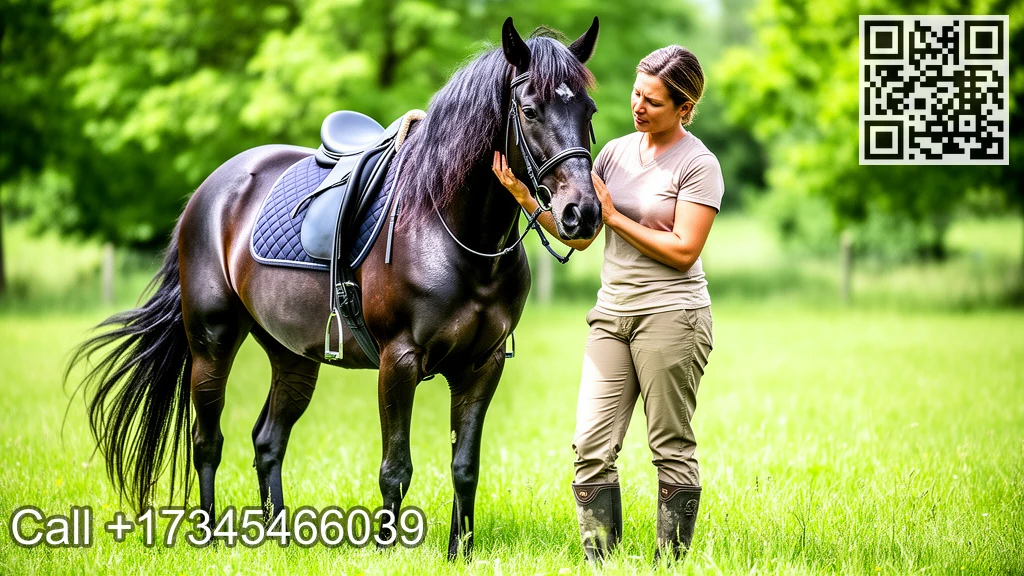
The usual thread is communication with live horses, generally on the ground. Tasks include pet grooming, leading, observing herd characteristics, liberty job, and straightforward barrier navigating. Installed job can be component of healing horsemanship, specifically for balance, sequencing, and confidence, yet it is not needed for emotional gains. Standing silently in a pasture, observing just how your upper body feels as a 1,000 pound target pet chooses to stand near you, can be sufficient for a breakthrough.
Most sessions last 60 to 90 mins. Some programs function one to one, others in tiny groups, commonly 3 to 6 participants. The task arc is predictable deliberately. Show up, facility, satisfy the steed or herd, take part in a planned activity, debrief, and close with a grounding regimen. Predictability is part of the medication for anxious systems.
Why horses aid when words fall short
I have worked for years with individuals that can not locate words for what their bodies are carrying. Horses fulfill them prior to words. The reasons are useful, not mystical.
Horses read nonverbal cues with a level of sensitivity we have a hard time to match. They see taking a breath deepness, muscle mass tone, micro-movements, and rhythm. If your jaw is tight and your steps fast, the horse may raise a head, plant a foot, or wander away. If you soften at the shoulders, slow your exhale, and set a regular walking tempo, the steed has a tendency to mirror and follow. This is psychophysiological feedback you can feel. You do something various with your body, and the steed reacts in actual time.
This supports somatic recovery with equines. You are not only discussing stress and anxiety, you are practicing what calmer seems like. With time, clients discover to disrupt spirals. Rather than assuming their escape of tension, they shape their breath, position, and emphasis first, then talk from a steadier place.
Horses additionally bring scale. Anxious ideas often stretch to load our field of vision. Stand next to a gentle draft mare that rests her chin on your shoulder, and your field of vision has to broaden. There is even more truth than the tale in your head. That point of view change is not an assurance, yet when it happens, individuals remember it in their bones.
A go through a first session
People commonly ask what to anticipate. Here is a composite from lots of initial days.
You park and see the quiet. The majority of barns sit off main roads. Birds, the pale chink of a container, the odor of hay, all of it reduces the nervous system a notch. At consumption we examine medical history, present supports, and goals. For anxiety, objectives commonly consist of sleeping through the evening, fewer panic spikes, increased tolerance for congested areas, and a method to turn the dial down at work.
We start with orientation. Where to stand, exactly how to come close to a steed at the shoulder, why it matters to maintain your feet clear. Safety and security is not a lecture, it is an initial lesson in visibility. You can not message and take care of a lead rope at the very same time.
With the steed at the rail, we practice breath in a way that is not valuable. Inhale through the nose for regarding four matters, pause, exhale with the mouth for a slightly longer count. Put a hand on the horse's shoulder if the animal permits it, feel the warm and muscle, see their rib cage change. Many steeds will start to yawn or blink greatly after a minute or 2 of silent touching. That release appears to provide people consent to allow go too.
Grooming tends to find next. It is tactile, predictable, and satisfying. I have watched high up-and-comers really feel authentic relief while curry brushing in slow, also circles. There is a job, it is clear, and conclusion is obvious. That quality usually stands in contrast to life outside the field where tasks multiply without end.
We could set a pattern with cones. Stroll to red, pause, turn, wait on the equine to discover you, then proceed with each other. It appears stealthily easy. This is where individuals discover just how their inner state shows up externally. If you hurry, your horse might lag or swing away. When you practice two sluggish breaths at each cone, your steed frequently tips up and matches you. The following day at the workplace, those two slow-moving breaths at a doorframe become a memory anchored to a really felt feeling of success.
We close with a debrief, sitting near the sector wall surface with water and sometimes a pepper mint for the equine. What really felt simple, what felt like work, what shocked you. We choose one practice to try in your home. The objective is constantly mobility. Procedure issue, but the week in between issues more.
How stress and anxiety shows up around equines, and what shifts
Anxiety is not one point. It can be a hum under the skin or a full surge that hijacks your breath. With steeds I often see 4 patterns.
First, over-functioning. People attempt to do everything right simultaneously, eyes snapping, hands active, a voice that runs ahead of breath. Equines read this as noise. Instructing people to simplify to one hint at a time can reduce everybody's heart rate.
Second, freeze. Some customers lock their knees and quit breathing. With them, I begin at the fence line. We do not touch a lead rope until we can really feel feet in boots and back-of-ribcage breath. Commonly I put a tiny sand timer on an article. 2 minutes of merely observing can restart activity without forcing it.
Third, avoidance packed as politeness. Individuals will certainly stand 5 feet away and ask the equine to come better, afraid to claim area. A kind gelding will certainly stroll over, yet the individual has actually not learned to take a step into their own ground. This is where a calmness, supported stride, heel to toe, comes to be a breakthrough.
Fourth, push through. Individuals who barrel onward despite nerves tend to collide with a horse's boundaries. If the mare swings her hindquarters away and pins an ear, that is details. Regard for those signals ends up being regard for one's very own restrictions in the future. I have watched customers terminate an overbooked evening after ultimately noticing what too much feels like in their body.
What changes in time is not a personality transplant. It is a steadier baseline and a quicker return to baseline after anxiety. Sessions provide you reps. Go for 6 to 8 regular sees at the start, after that infected biweekly. Some customers stay for a season and really feel ready to proceed. Others come back throughout tough life phases like separation or grief.
When coaching, therapy, and activities overlap
Terms can be confusing. Equine-assisted solutions is an umbrella that includes therapy, learning, and coaching. Healing horsemanship typically stresses ability structure and flexible riding. Equine-assisted tasks can resemble group structure with equines, young people leadership, or health resorts. Equine-facilitated mentoring has a tendency to concentrate on objectives, routines, and performance. All of these can come from equine-facilitated wellness if the aim is whole-person law and growth.
Clarity matters. If you need treatment for diagnosed anxiousness or trauma, select a program with a qualified psychological health professional incorporated right into sessions. If you are seeking brand-new devices for stress and anxiety and clearer interaction, equine-assisted mentoring might fit. Ask about the service provider's scope, training, and how they coordinate with your existing assistances, including medication prescribers or speak therapists. Good programs gladly collaborate.
Horses and children with sensory or interest differences
Horses can be a lifeline for youngsters that struggle to sit still, tolerate sound, or checked out social hints. I have run an autism equine learning program where the first win was just a child stepping into the barn without hands over ears. We placed visits at quieter times, utilized aesthetic timetables, and maintained tasks short with clear begins and surfaces. Horses offered social cues that were unambiguous. If a youngster flapped near an equine's flank, the steed shifted away. When the kid softened their body and touched at the shoulder, the equine returned. That loop taught timing and gentleness quicker than any type of worksheet ever could.
ADHD equine discovering assistance looks different. We melt energy first. Twenty laps of leading at a quick walk, weaving via standards, then brushing. Mounted work can help with sequencing and right-left combination. I such as patterns with https://connernqdf650.almoheet-travel.com/autism-friendly-trails-an-equine-knowing-program-that-invites-all three to five actions due to the fact that success is quantifiable. We additionally practice quiet waiting, not as a penalty, however as a shared pause with the horse. A minute is a long period of time for some kids. When the steed yawns midway via the min, kids see their initiative land.
For youngsters with sensory difficulties, equines provide a different therapy for sensory obstacles that complements work treatment. The feel of a steed's layer, the rhythm of strolling, and the deep stress of leaning right into a warm shoulder can organize a frazzled system. That claimed, not every kid delights in barn audios or scents. Some need ear defense or a much shorter go to. We pass the child's cues, not our agenda.
Adults, job, and the herd
Adults often show up for one of two factors. Either their anxiousness is dripping into family life, or it is constraining their management at the office. With the last, team structure with steeds can be revealing. You can not fake followership with an equine. If your cues are inconsistent, the horse thinks twice. If you rush, the equine stops. If you get huge without balance, the horse spooks. Teams that deal with depend on frequently replicate those patterns in the arena.
A brief series I such as entails haltering a horse as a group, then moving via a straightforward L-shaped barrier program. No talking allowed till completion. Individuals find out to interact with eyes, breath, and hands. Later, in debrief, the silent colleague commonly shares that she ultimately really felt heard. The talkative supervisor realizes he steps in too soon. Back at the office, that understanding comes to be a change in meeting assistance or delegation.
The gain is not magic. It is experiential knowing with horses that makes abstract ideas concrete. Borders become where you stand and when you tip. Compassion ends up being how you match pace. Liability becomes whether the horse really relocated through the barrier with you.
Safety, approval, and steed welfare
A calm outcome hinges on a structure of security. Headgears are not simply for riding. Closed-toe footwear are nonnegotiable in the majority of programs. We show individuals to discover ears, eyes, tail, feet, and to read the whole steed, not one component. Nerve systems co-regulate both means. If the horse is limited, we pay attention. If the individual is overwhelmed, we tip back.
Consent runs both directions. Ask before touching. View the steed's answer. A lowered head, a soft eye, a weight shift towards you, these are green lights. A tail swish, pinned ear, tightened up muzzle, or shift away suggests pause. Developing a habit of asking and seeing modifications the tone of sessions and, with time, the tone of connections outside the barn.
Welfare is not home window dressing. Great programs maintain herd sizes sensible for the land, track body condition ratings, revolve turnout, and schedule normal farrier and vet care. Procedure include breaks and do not treat equines as devices. If an equine declines a task, we respect that. If a horse consistently declines, we reassess their duty. I have actually retired equines to complete pasture lives when they revealed us they were done saying yes.
Myths worth setting down
A few concepts have a tendency to confuse newcomers.
Horses as therapists. Horses are not therapists. They are companions that supply feedback and presence. People, with training and moral standards, hold the restorative frame.
Ride or it does not count. Foundation can be as, or more, efficient for anxiety assistance with equines. Mounted work has benefits, especially for postural control and rhythm, yet calm does not depend on a saddle.
Quick fixes. You may really feel a change in session one. Long-term change generally takes weeks, occasionally months. That timeline is not a failure. It shows how bodies learn.
Only for equine people. Many of my most responsive customers had never touched a horse prior to they walked in. A novice's mind helps.
A quick story of three clients
Sam, a firemen, was available in with a system tuned for activity. He had night awakenings, a jaw that clicked from clenching, and a tendency to speed. With a tranquil gelding called Rio, Sam practiced three breath cycles before every demand. After 6 sessions, his better half reported fewer door checks before bed. Sam stated he was using the breath cue at the station prior to hard calls. He did not come to be less attentive. He came to be more selective regarding when to transform it on.
Mila, a middle schooler with autism, wished to stop covering her ears throughout assemblies. Noise-canceling earphones helped, but she wanted an additional device. Over 10 weeks we constructed a routine with a horse called Jasper. 2 brushes each side, then a nose touch, after that 3 steps together. At week 4 she asked to lead without me. At week eight she attempted an assembly with earphones down for the first 5 mins, fingers on her ribs to feel breath. She made it seven minutes that day, after that twelve the following week. On week 10 she transformed to her mother and claimed, I can do tough points if I count my breaths.
Dev, an advertising and marketing exec, reserved equine-facilitated coaching after a 360 review called him dazzling and tiring. In the sector he asked a mare to stroll on, then clucked, after that tugged, then elevated his voice. The mare iced up. We reset. He practiced one ask, after that a time out. The mare took a step. Waiting was the work. Dev later redesigned his face to face around a single concern and a quiet count of three prior to responding. His team did not instantly love him. They obtained even more room. Result improved.
Simple means to bring barn tranquil home
Two methods transfer well from the field to daily life. They appear easy. Simple is the point.
A breath that leads. Equines follow exhale. People do as well. When you really feel activation surge, extend your out-breath by a second or more. Utilize a doorframe, a crosswalk, or the minute your video telephone call attaches as your cue. You can include a hand on your sternum if that helps.
An action that declares space. With an equine, stepping towards the shoulder with quality invites movement. At work or at home, take one aware enter your own ground before you speak, particularly if your voice has a tendency to disappear under pressure. That step changes what leaves your mouth.
Who it is not for, and when to wait
Honesty offers everybody. Equine-facilitated health is not perfect for people in active psychosis or those with unrestrained fierce behavior. If you remain in intense withdrawal, situation stabilization comes first. Extreme hatreds horses or hay can be a barrier, although some customers handle with medication and masks.
If you are horrified of horses, it can still work, yet we go slow-moving. Some customers begin with monitoring outside the fence for a few sessions. Others understand a different method would certainly be kinder to their nervous system in the meantime. Option is central.
Choosing a program you can trust
The field consists of several exceptional suppliers and a couple of that rely on buzzwords. Look past the web site gloss. Ask about training, security protocols, and how they customize sessions to stress and anxiety. You want to hear clear limits, reference of approval, and regard for equine well-being. Ask what a normal progression resembles and how they determine adjustment. Companies need to want to collaborate with your specialist or doctor if you wish.
Here is a brief list to direct your search:
- Credentials line up with your needs, for example a qualified specialist for professional anxiety or an experienced train for performance goals.
- Safety practices specify, including helmet plans, emergency situation plans, and equine selection.
- Sessions are structured, with time for grounding, activity, and debrief.
- Horse welfare is clear, with information on turnover, work, and healthcare.
- Goals and progress are tracked in writing, and you get copies.
If you visit, observe your body in the area. Do you really feel rushed. Does the barn feel orderly. Are horses standing with soft eyes or pinned ears. Your nerve system frequently recognizes before your rational mind catches up.
What the numbers can look like
I avoid sweeping assurances, however patterns show up. Throughout 8 to twelve sessions, many clients report resting much better, shorter and much less extreme panic spikes, and boosted interaction at home or work. I have seen resting heart prices drop by 5 to 10 beats per min during sessions compared with consumption, based on wearable data customers shared. That change may not persist 24 hours a day, but the body discovers what convenience seems like and improves at returning there.
Attendance matters. Weekly sessions for the very first month build momentum. In the house, individuals that couple an everyday 2 minute breath practice with a brief body scan have a tendency to maintain gains. Those that share goals with a partner, good friend, or coworker typically follow through more consistently.
Integrating with various other supports
Equine-facilitated wellness often sits beside talk therapy, medication, yoga exercise, or mindfulness practices. The key is communication. If you are on a brand-new medicine, tell your facilitator. Some medications alter sweat rate or warm tolerance. Hot barns can amaze you. If your therapist is working on a particular exposure prepare for anxiousness, your equine sessions can enhance the very same skills with clear, physical feedback.
I have actually had customers bring journal triggers from their counselor bent on the rail. I have actually signed up with case calls with school teams to straighten techniques for a child with sensory sensitivities. The horse work is effective, however it is not a silo.
Getting began without overwhelm
Beginning something brand-new while nervous can seem like dragging a support. Maintain it simple.
- Search within a workable distance, such as 30 to 45 minutes from home, and shortlist 2 programs that match your needs.
- Book a low-stakes browse through initially, a half an hour positioning without any expectation to take care of a horse.
- Wear comfortable layers, closed-toe footwear, and bring water, cells, and any needed medications.
- Plan a silent 20 minute buffer after the see to debrief with on your own. No rushing to the following thing.
- Choose one home technique from the session and timetable it for a certain day-to-day sign, such as cleaning your teeth at night.
Small, clear actions work better than grand plans. Equines instruct that every day.
A quiet kind of hope
I think about Cara typically, the lady from that gusty Tuesday. She stayed for 10 sessions. On week 5 she stated she quit inspecting the departures in every room. On week 9 she informed me she took her first solo walking in 2 years, a short loophole at a local park where she practiced the exact same breath she learned with the bay gelding. On week 10 she brought him a pepper mint and represented a lengthy moment with her forehead against the place where his hair began. Not treated, she claimed. Calmer. That was the word that fit.
Equine-facilitated wellness does not remove life's hard sides. It offers you a body-level way to meet them. With equines, calm is not an abstract idea or an inspirational quote. It is a hand on cozy shoulder muscle mass, an exhale you can hear, a big animal choosing to stroll with you since you turned up in such a way that really felt secure. Gradually, that experience reshapes just how you turn up for yourself.